CrossFit has a reputation problem.
Ask someone who's never stepped foot inside a CrossFit gym what they think about it and you'll probably hear words like intense, competitive, or maybe even dangerous. What you probably won't hear is the word that describes it best: longevity.
The irony is that the last time I checked, CrossFit wasn't one of the leading causes of death in America.
Heart disease is.
Cancer is.
Many of the chronic diseases that shorten people's lives are closely tied to years of inactivity, poor nutrition, and neglecting their health. Yet those are the very things regular exercise has consistently been shown to help reduce the risk of.
Somehow we've become more afraid of the solution than the problem. People spend years avoiding exercise because they think it's too hard, too dangerous, or they'll "get serious someday." Then one day they find themselves sitting in a doctor's office hoping someone else can solve the very problems that years of movement could have helped prevent or delayed.
Don't get me wrong. I'm incredibly grateful for modern medicine. If I get in a serious car accident, suffer a traumatic injury, or have a medical emergency, there's no place I'd rather be than an American hospital. Our healthcare system is incredible at diagnosing disease, treating emergencies, performing life-saving procedures, and helping people through illness.
But that's exactly the point.
Healthcare is primarily designed to care for you after something has gone wrong. It isn't designed to replace the daily habits that keep you healthy in the first place. No doctor can squat for you. No surgeon can build your strength. No prescription can improve your balance, endurance, or help you get off the floor when you're eighty years old. Those things have to be earned long before you ever need them.
CrossFit isn't trying to replace healthcare.
It's trying to keep you healthy enough that you need it less often.
Not because CrossFit is easy. It isn't. Not because it's designed to make you comfortable. It isn't. Because when it's coached correctly and scaled appropriately, CrossFit prepares you for something far more valuable than a six-pack or a personal record.
It prepares you to live a longer, healthier, more capable life.
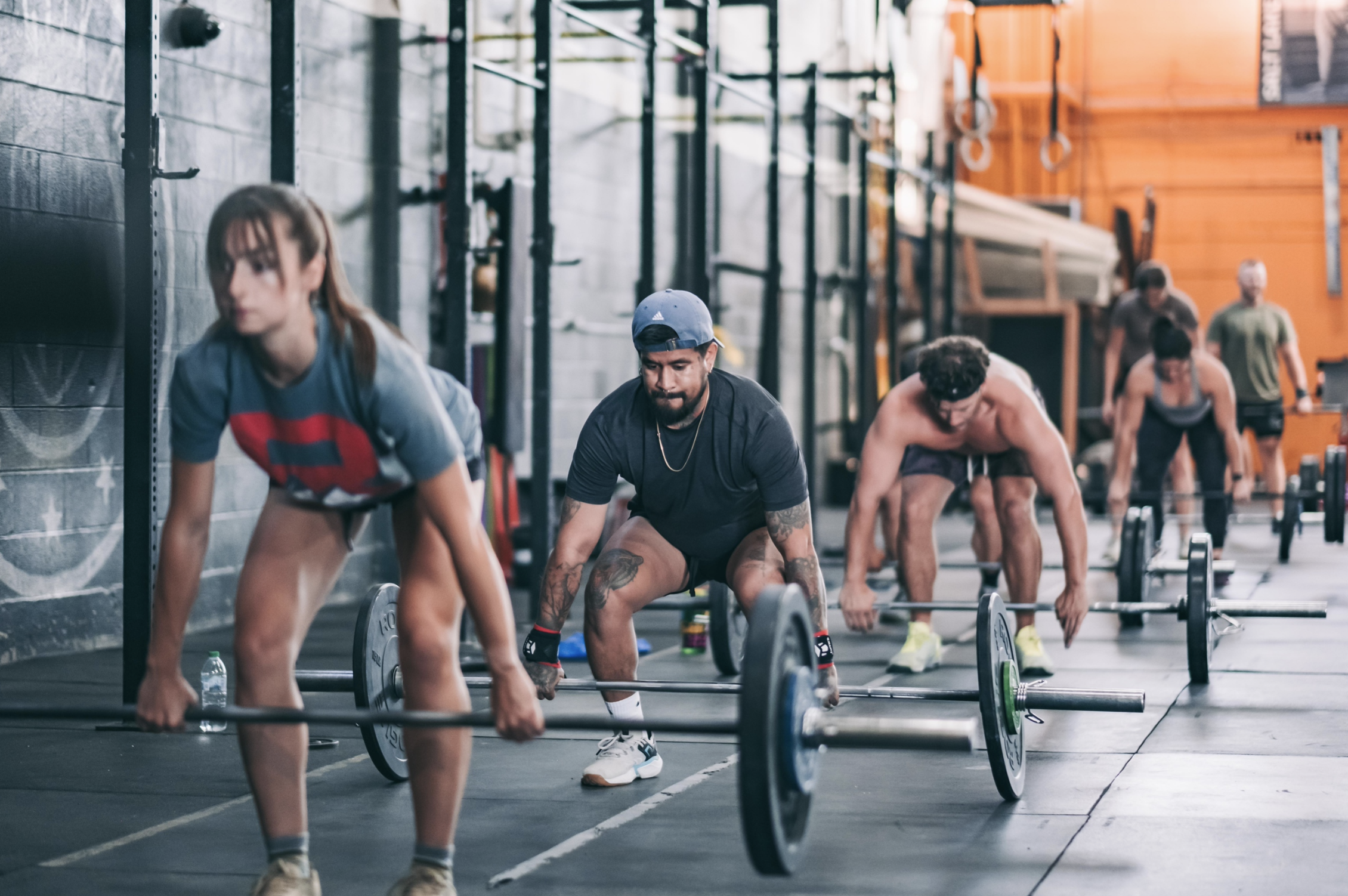
The problem is that most people confuse CrossFit with what they see on ESPN or social media. They see elite athletes lifting enormous weights, doing muscle-ups, and pushing themselves to the limit, then assume that's what every CrossFit class looks like.
It would be like watching the Tour de France and deciding riding a bike isn't for you. Elite athletes don't define CrossFit. They simply show what's possible.
One of the foundational principles of CrossFit is that the needs of Olympic athletes and our grandparents differ by degree, not kind.
That's a fancy way of saying your body doesn't suddenly need different movements because you get older. Whether you're training for the Olympics or simply trying to get out of a chair without assistance, your body still needs to squat, push, pull, carry, balance, build strength, and improve its cardiovascular health. The only difference is how much weight you use, how fast you move, and how often you train.
Think about that for a minute.
An Olympic athlete squats to become stronger for competition. An 80-year-old squats so they can stand up from a chair without assistance. One person back squats 400 pounds. Another lifts a kettlebell. One runs. Another walks.
The movement is the same.
The difference is only the load.
That's why every CrossFit workout can be scaled to the individual. A former college athlete and someone who hasn't exercised in twenty years can take the same class together. Each person gets exactly what they need because the workout changes to fit the person, not the other way around.
Most people begin exercising because they want to lose weight, have more energy, or feel more confident.
Those are great reasons to start.
But the goal isn't to lose weight.
The goal is to build a body that still serves you decades from now.
Over the years I've watched countless people put off their health because they believe they'll have time later. They talk about retirement like it's the beginning of the good life. They'll travel the world. They'll hike national parks. They'll play golf three days a week. They'll spend more time with their grandkids.
Then retirement finally comes, and they realize their body isn't capable of the life they spent decades dreaming about.
They spent decades preparing for retirement financially.
They spent almost no time preparing for it physically.
Their back goes out after one round of golf. They can't bend over to pick something up off the floor without pain. Walking up a hill leaves them out of breath. The places they dreamed of exploring become places they can only admire from a distance.
Your body keeps score.
Every workout you skip.
Every year you tell yourself you'll start "next month."
It all adds up.
One day, the bill comes due.
The longer you wait, the more expensive it becomes.
That's what fitness is really for.
CrossFit gets there by training the movements humans were designed to perform. We squat, press, pull, carry, lift, jump, run, row, and climb because those are the movements life demands of us. Instead of teaching individual muscles to work alone, we teach the body to move the way it was designed to move.
Most traditional gyms are built around machines that isolate individual muscles. There's nothing inherently wrong with isolation exercises. They absolutely have their place. But if that's all you ever do, you're training your muscles to work separately when real life requires them to work together.
Imagine picking up a heavy box off the floor.
Your legs don't work first and then hand things off to your back.
Your back doesn't pause while your shoulders catch up.
Your body doesn't say, "Glutes, you're up. Core, wait your turn."
Everything works together.
The same is true when you're carrying groceries, loading luggage into the car, moving furniture, catching a child who's about to fall, or hiking up a steep trail. Real life doesn't happen in isolation. It demands that your body work as one complete system.
When one part of that system is weak or your body has learned inefficient movement patterns, something else has to compensate. Over time those compensations become the aches, pains, and injuries people often blame on getting older.
Many times it isn't age.
It's years of moving poorly.
CrossFit also prepares you for something else that life guarantees: the unknown.
Life doesn't tell you exactly what movement you'll need tomorrow. It simply asks your body to respond. Maybe it's carrying a sick child to bed. Maybe it's helping a friend move. Maybe it's climbing five flights of stairs because the elevator is broken. Maybe it's hiking farther than you planned because your family wants to keep going.
That's why we don't spend all of our time isolating individual muscles or chasing the perfect bicep pump.
We build strength.
We improve endurance.
We develop balance, coordination, mobility, and power.
Not because life happens one quality at a time.
Because life demands all of them at once.
The goal isn't to become exceptional at one movement.
It's to build a body that's capable of handling whatever life throws at you.
There's one more reason CrossFit works so well.
People stick with it.
The best fitness program in the world is useless if you quit after six weeks. CrossFit creates accountability. Coaches know your name. Friends notice when you're missing. They celebrate your first pull-up just as much as someone else's personal record.
Longevity isn't built in one workout.
It's built over thousands of them.
At our gym, we're not trying to create CrossFit Games athletes.
We're trying to help busy adults become stronger, healthier, and more capable so they can enjoy the next 30 or 40 years of their lives.
CrossFit was never about surviving the workout.
It was about building a body that's ready for whatever life asks of it.
At 30.
At 50.
At 70.
And hopefully at 90.
Because every one of us will pay for our health eventually.
We can pay now with discipline.
Or we can pay later with disease, limitations, and regret.
The bill always comes due.