

You can scale the workout. Not the commitment.
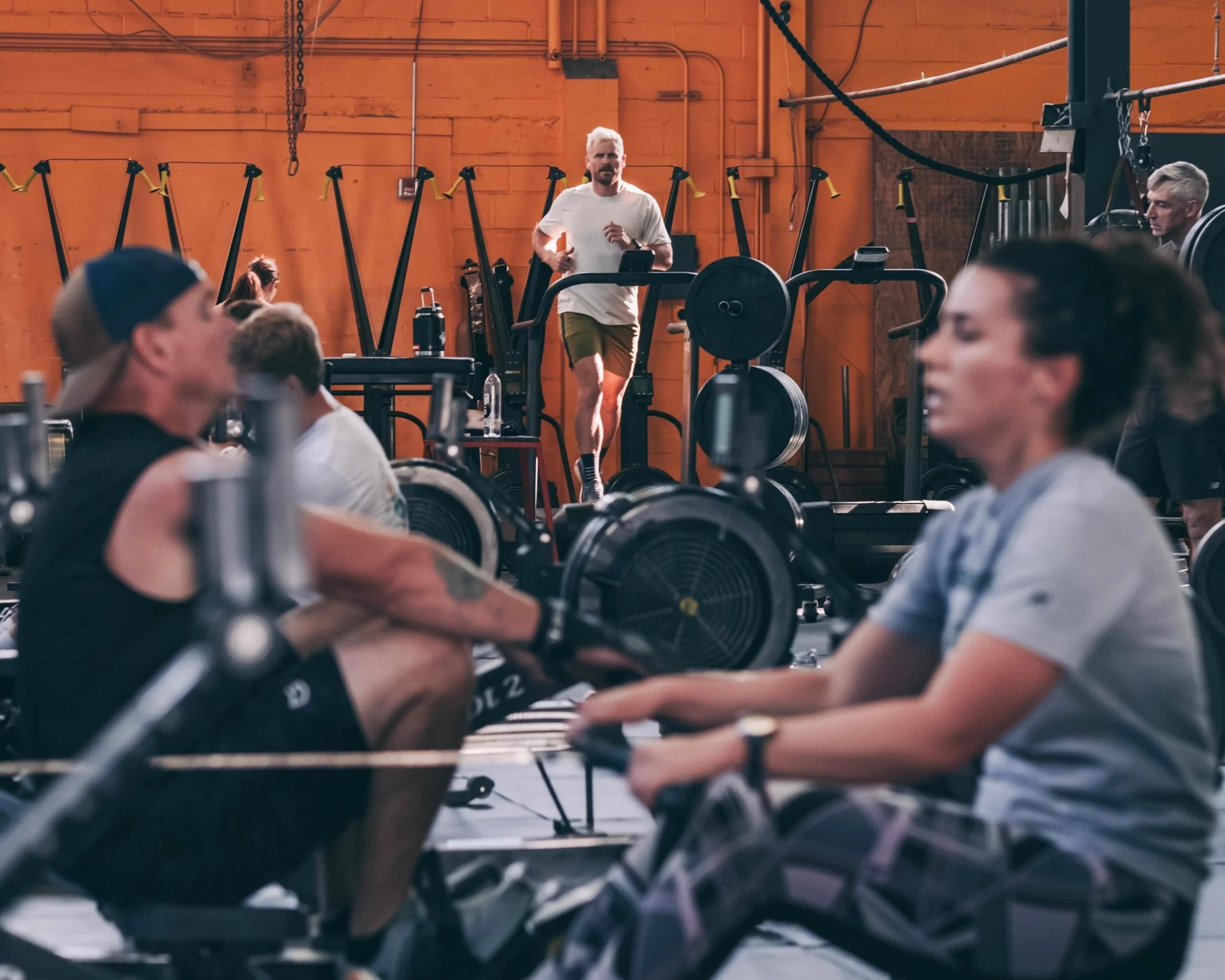
Have you ever looked at the workout, realized you weren't feeling it, and decided to skip?
Maybe you didn't sleep well. You're sore, stressed, or just exhausted from everything else going on in your life.
You know you're not going to lift what you normally lift or move as fast as you usually do.
So you figure you'll just go tomorrow when you're feeling better.
I think this is one of the biggest mistakes people make with fitness.
They assume that if they can't give 100%, it's not worth showing up at all.
But that's not how consistency works.
Not every day needs to be a great workout
I love a good, hard workout. I love pushing myself, lifting heavy, and seeing what I'm capable of.
But I also know that not every day is going to be that kind of day.
Some days I feel great.
Other days I'm tired, sore, distracted, or just not in the mood.
And on those days, I have a choice.
I can skip because I know I'm not going to perform at my best, or I can show up and adjust my expectations.
Maybe that means using lighter weights, scaling movements I would normally do RX, moving slower, or just getting through the workout without worrying about my score.
If 70% is what I have to give that day, then giving 70% is still giving everything I have.
And that's a perfectly good workout.
Scaling is a skill, not a setback
I think people sometimes forget what scaling is actually for.
It's not just for beginners or people who can't do a movement yet.
It's for everyone.
It's how we adjust training to match our ability, our goals, and what our body can handle on any given day.
Just because you can do a workout RX doesn't mean you always should.
And just because you lifted a certain weight last week doesn't mean you need to lift it again today.
That's why we have coaches. That's why workouts have options.
We're not trying to see how much we can beat ourselves up every day.
We're trying to get fitter, stronger, and healthier over time.
And sometimes the smartest thing you can do is take your foot off the gas a little.
The habit matters more than you think
Here's the part I think gets overlooked.
Sometimes the biggest benefit of going to the gym isn't even the workout.
It's the fact that you went.
You told yourself you were going to do something, and you followed through.
Even when you didn't particularly feel like it.
That's important.
Because every time you keep a commitment to yourself, you're building trust in your ability to follow through.
And the opposite happens too.
If every time you're tired, busy, unmotivated, or not feeling your best, you decide to skip, it becomes pretty easy to talk yourself out of things.
Eventually, you stop trusting yourself to do what you said you were going to do.
Confidence doesn't just come from what you accomplish. It also comes from knowing you can count on yourself.
I think that's a big part of what we mean when we talk about Proving You Can.
It's not always about doing something impressive.
Sometimes it's doing something you said you would do, even when you really don't want to.
There's a difference between needing rest and not feeling like it
Now, I'm not saying you should drag yourself to the gym when you're sick, injured, or genuinely need recovery.
Rest is part of training, too.
But I do think we need to be honest with ourselves about the difference between needing rest and just not wanting to go.
Because if we're waiting for the perfect combination of energy, motivation, and a workout we like, we're going to spend a lot of time waiting.
And the reality is that most of us have jobs, kids, responsibilities, and a hundred other things competing for our time and energy.
You're probably not going to feel amazing every time you walk into the gym.
That's normal.
You just need to learn how to work with what you've got.
Give yourself permission to do less
The next time you're tempted to skip because you know you can't give your usual effort, try something different.
Go in.
Tell your coach you're not feeling your best.
Adjust the workout and don't worry about what you would normally do.
You don't need every workout to be a test of your fitness.
Sometimes it's enough to move, spend an hour with good people, and keep the routine you've worked hard to build.
And if you genuinely need a rest day, take one without guilt.
The goal isn't to give maximum intensity every day. It's to make choices that support your health and fitness consistently.
Don't let the fact that you can't do everything become the reason you do nothing.
Now, put it into practice
If you're already a member: The next time you're tempted to skip because you're tired, sore, or don't like the workout, ask yourself whether you actually need rest or just need to adjust your expectations. If it's the latter, come in. Tell your coach what you've got that day and let us help you make the workout work for you. You don't have to RX everything to get something out of being here.
If you're not a member, or it's been a while: You don't need to be in shape to start, and you definitely don't need to be capable of doing everything you see in a CrossFit class. That's what coaching and scaling are for. Whether you're brand new or trying to get back into a routine, we'll meet you where you are and help you build from there.
Ready to get started or come back? Reach out and let's talk about what makes the most sense for you. That might be one-on-one coaching, Phase 2, or jumping into a class.
You don't have to have it all figured out. You just have to be willing to start.
Fitness Elevated
PROVING YOU CAN.